
Case study
A shoe shop website where customers find their size before they leave home
Shostka and Kyiv, Ukraine · Ukrainian · catalogue, stores and delivery
The problem.
Lika and Podium are two shoe and accessory shops in Shostka, with a presence in Kyiv, selling comfort brands such as Rieker, Remonte and Caprice. Their shop window has been Instagram: many photos, but no way to see whether a pair comes in your size, and every question is a message. A customer choosing shoes needs three answers: does it come in my size, which shop has it, and how do I get it. The site is built around those three questions. The demo is in Ukrainian, and the products and prices in it are placeholders.
What it looks like.
Opens in this tab. It is a demo copy: forms and outside links are switched off.
What is on the page, section by section.
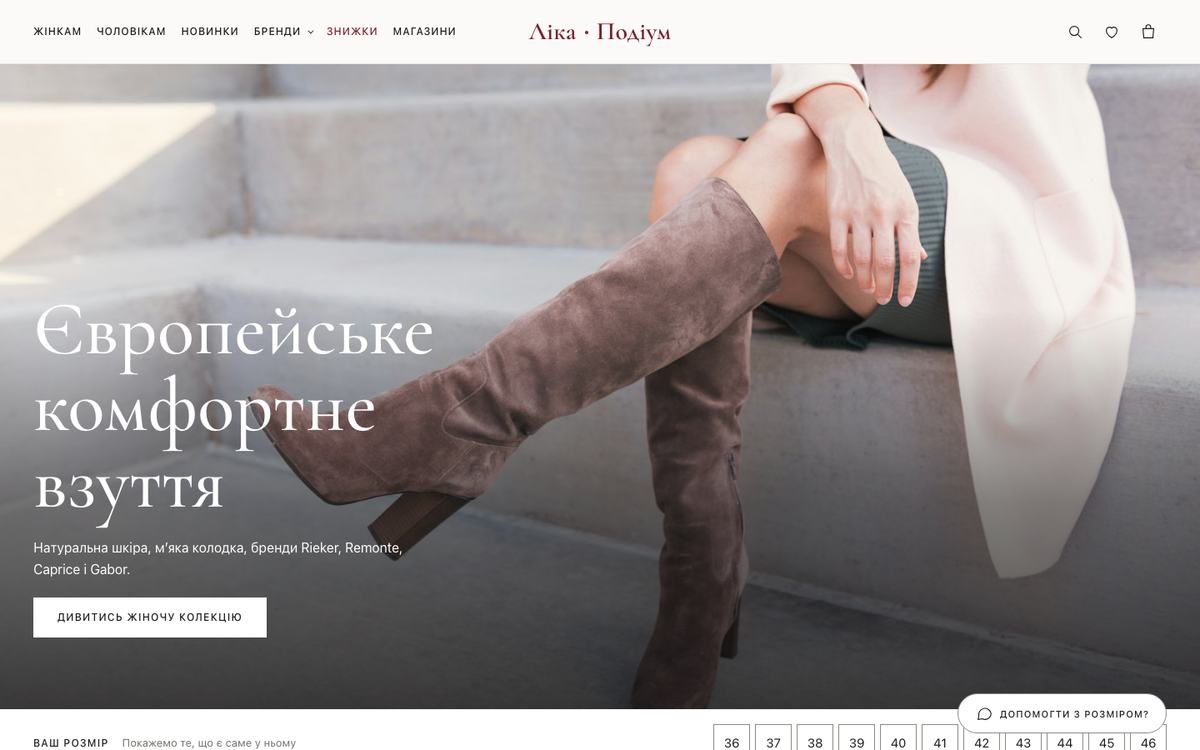
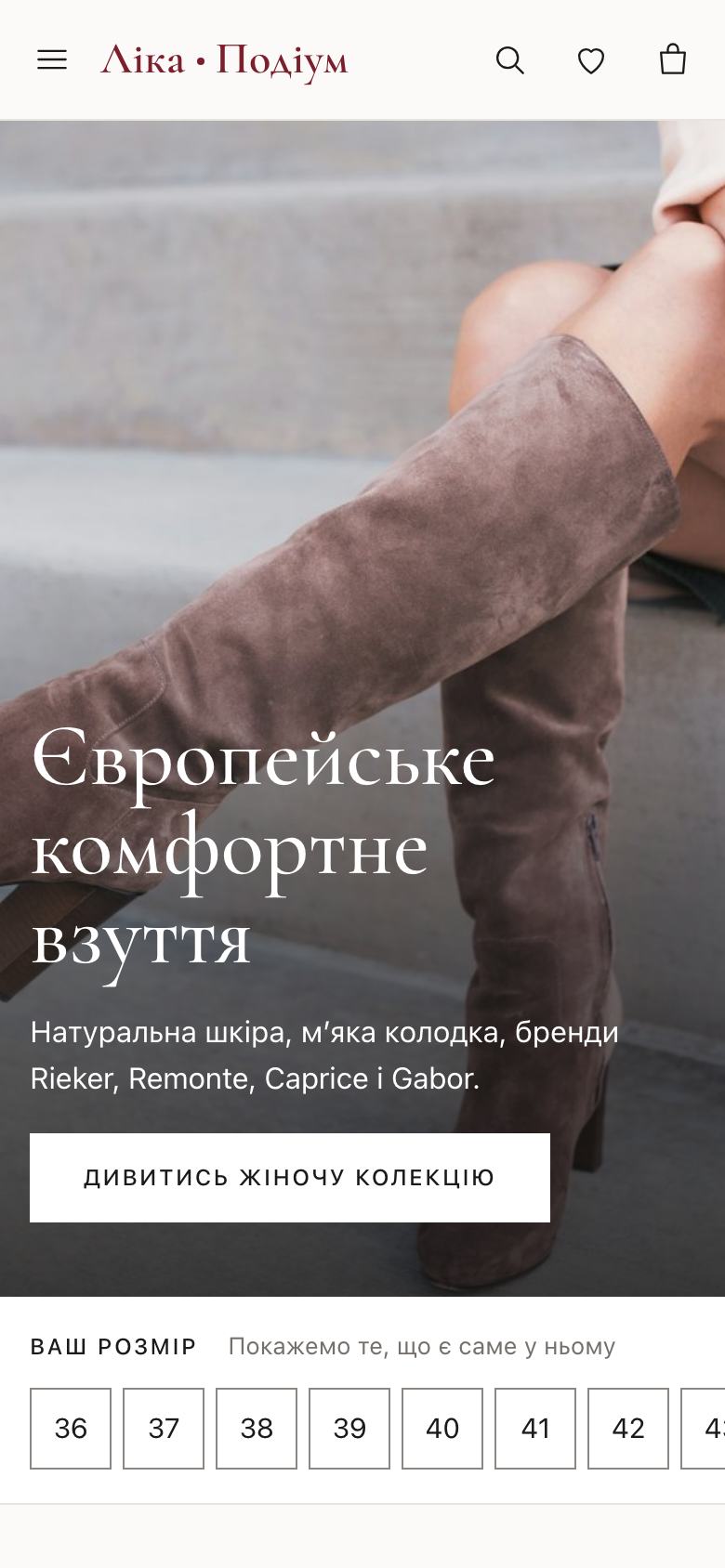
"Your size" strip on the home page
The shopper picks a size once, the site remembers it, and the catalogue shows what is available in that size.
Shoe shoppers filter by size before anything else. Hiding what does not fit saves them clicks and disappointment.
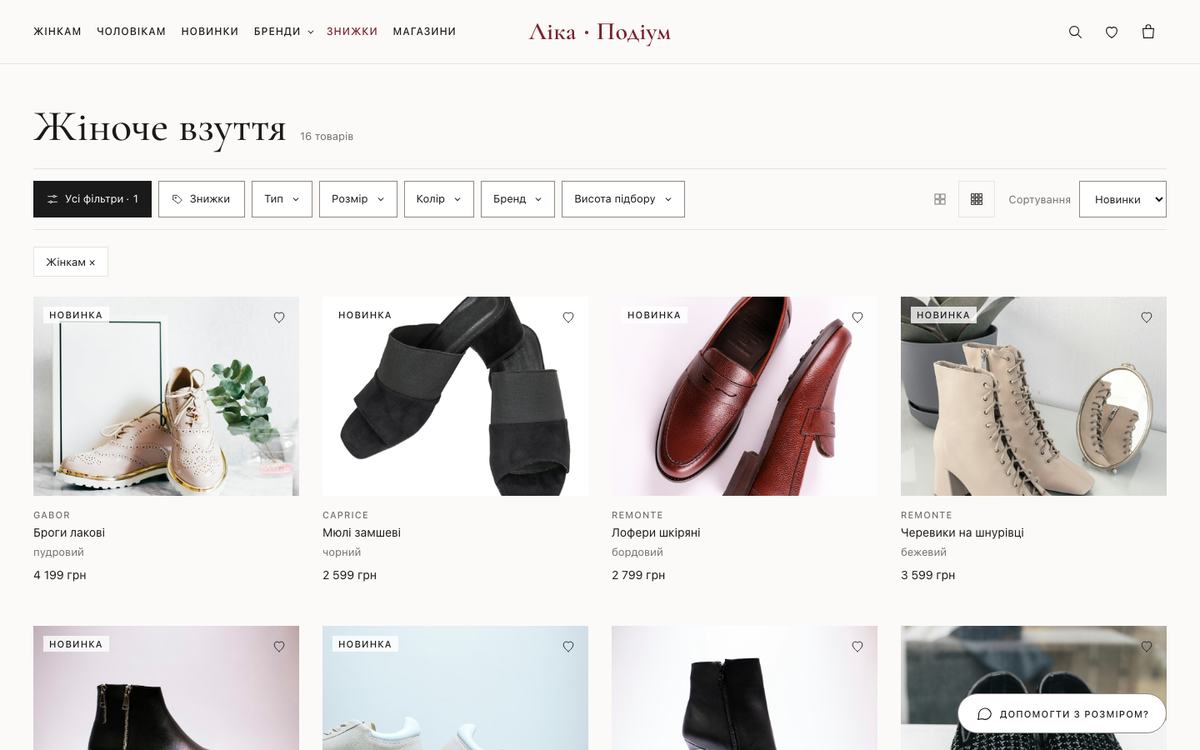
Catalogue with filters
Filters for size, brand, season, width, material, colour and price. The chosen filters sit in the page address, so a filtered view can be shared. On phones the filters open as a sheet with a "Show N items" button.
Comfort shoppers care about width, material and removable insoles more than a fashion shopper does. The filters follow the questions a shop assistant would ask.
Product page
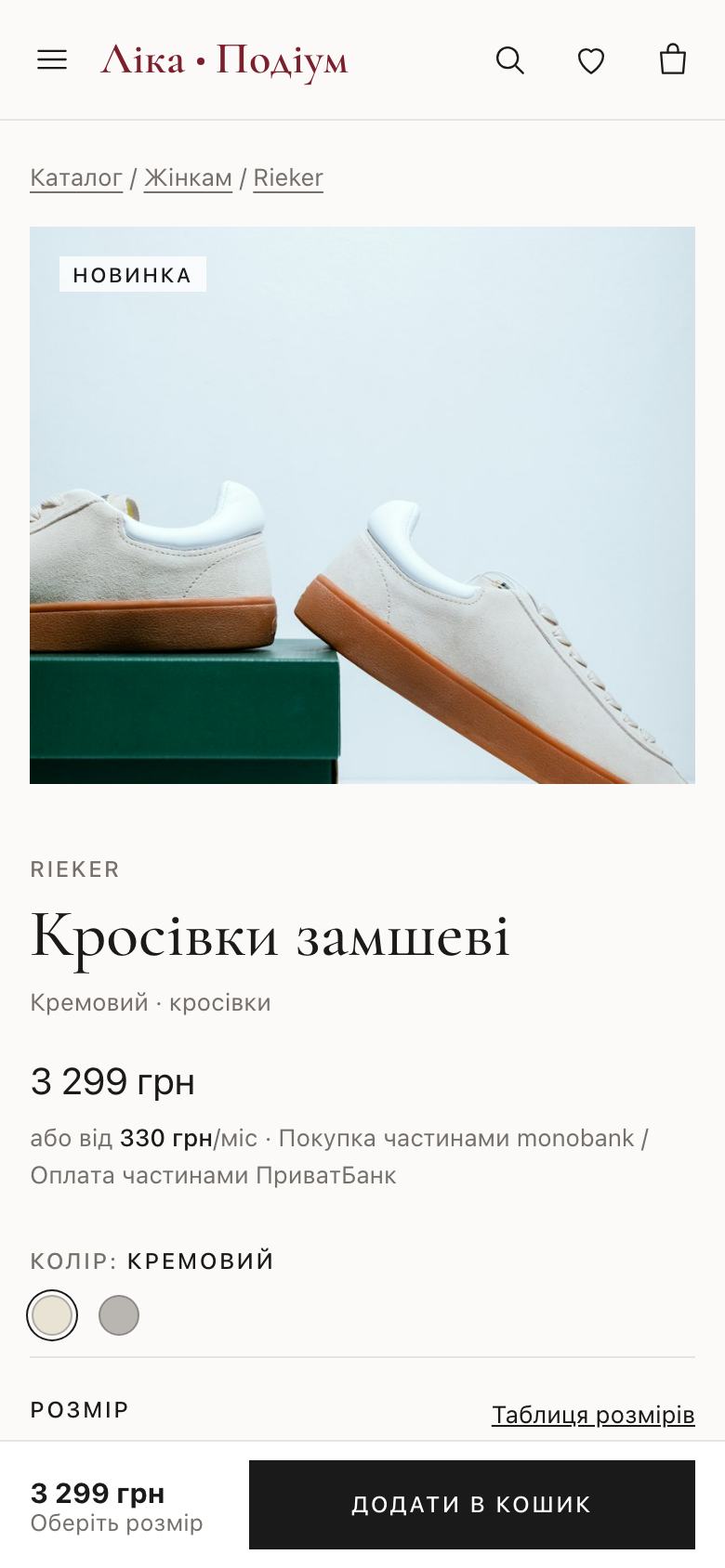
Photo gallery, size buttons with unavailable sizes greyed out, a fit note, a size guide, a spec table and the delivery and returns promise next to the buy button. On phones the add-to-cart bar stays at the bottom.
It answers what a customer would ask across the counter, so they can decide without writing first.
Reserve in store
After choosing a shop, a button opens a messenger or the phone with a message that already names the model and the size.
Many local customers want to try shoes on. This turns browsing into a visit, and the staff know exactly which pair to set aside. Stock levels in the demo are placeholders.
Stores page
Each shop with its phone number and opening hours, and an "open now" label worked out from those hours.
Hours can change, so they sit in one small file that is easy to edit. A customer can see at a glance whether the shop is open.
Cart and checkout
A cart drawer, then a one-page guest checkout with the phone number first, Nova Poshta delivery and payment options. The demo does not take real orders.
It follows how people in Ukraine usually buy and receive parcels, so the last step feels familiar.
Services used.
Pages on this site that describe the work behind this case.
How we would adapt this to your business.
- A shop with stock in more than one place: show which shop has the item in the customer's size and send them to the right one.
- If you sell mostly on Instagram: a catalogue with real filters gives your best products a home and a link for your bio.
- We set up how new products get added to match who in your team will do it and how much time they have.
Want something like this for your business?
Tell us what you sell and who you want to reach. We reply with a plan and a price.